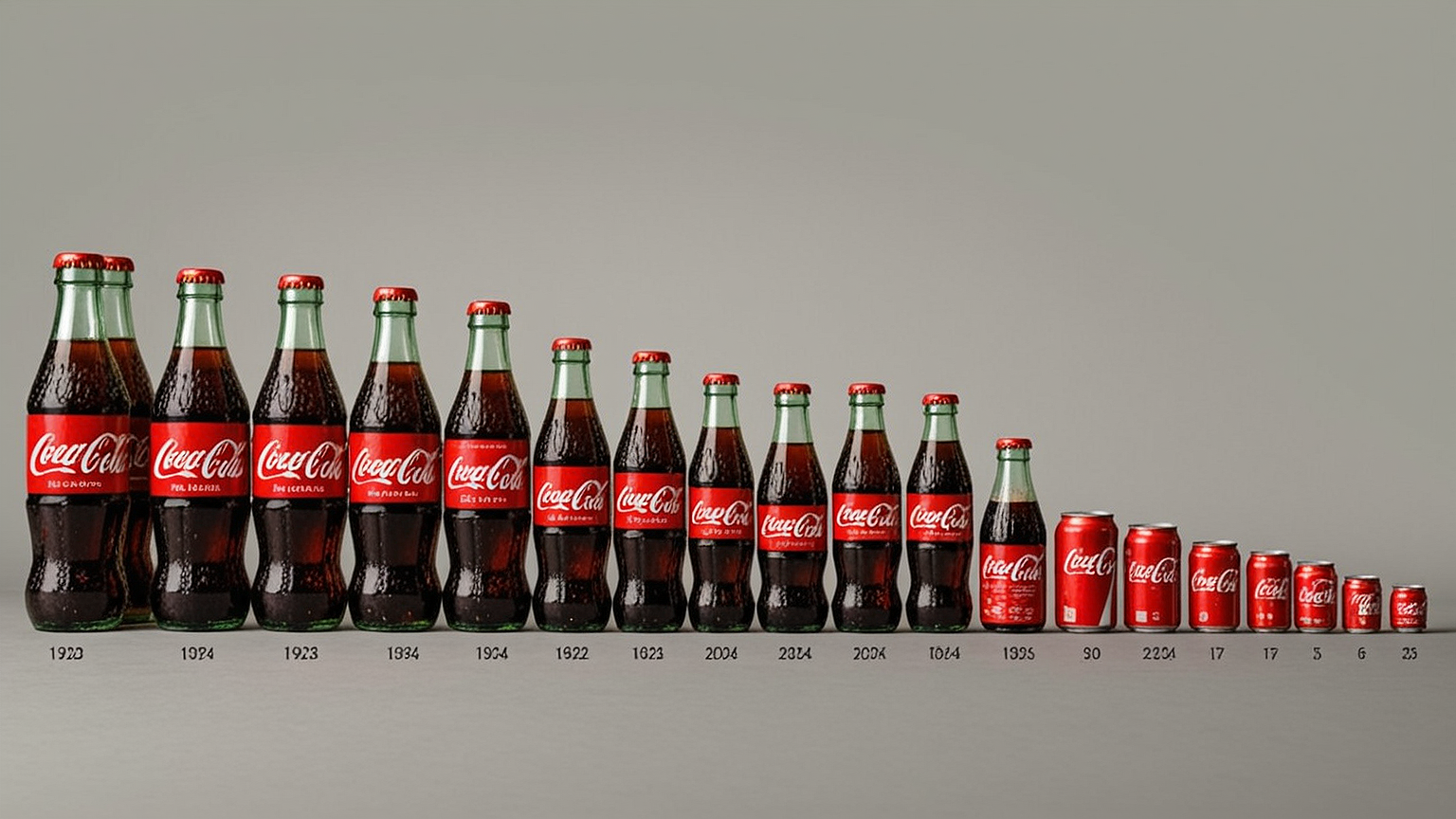
We are always told that prices have to go up for an economy to thrive and encourage spending? But how can it be positive for anyone that prices goes up all the time, especially when they go up faster and faster. Eventually they rise faster than your paycheck.
Your morning coffee costs more than it did last year, rent is higher, and gas prices seem to hit new records every month.
Politicans and other leaders blame greedy corporations, supply chain shortages, or wars and other geopolitical crises. While those factors can cause temporary price spikes, they don’t explain the permanent, compounding erosion of your money’s purchasing power.
To understand the global economy—and protect your financial future—you need to understand the real mechanics of inflation and why it works against you and the welfare of a society. It isn’t a natural disaster. It is a monetary phenomenon invented by the system.
Redefining Inflation: The Hidden Shift in Meaning
Historically, the definition of inflation was simple: an increase in the money supply.
When a central bank prints more currency, the total amount of money chasing the same amount of goods and services increases. Naturally, prices rise.
Today, mainstream economists have flipped the definition. They call the rising prices inflation. This is a clever linguistic trick. By focusing on the symptom (rising prices) rather than the cause (printing money), governments can shift the blame away from central bank policies and onto the free market.
Think of it this way: If you dilute a glass of milk with water, you get more liquid, but the milk becomes less nutritious. Printing money dilutes the value of every single dollar already in existence. Rising prices are simply the market adjusting to weaker money.
The History of Currency Debasement: 3 Lessons from the Past
Inflation is not a modern invention. Governments have been destroying their currencies for thousands of years to fund expenses they couldn’t afford through regular taxes.
1. The Roman Empire (Coin Clipping)
During the decline of the Roman Empire, emperors wanted to fund massive militaries and grand public projects. Since they couldn’t just print paper money, they recalled physical silver coins (the Denarius) and melted them down. They mixed in cheap metals like copper, reducing the silver content of each coin.
- The Result: The government made more coins out of the same amount of silver. The market caught on, prices skyrocketed, and the Roman currency eventually became completely worthless, contributing to the collapse of the empire.
2. The Weimar Republic (The Printing Press)
Following World War I, Germany faced impossible war reparations. To pay its debts, the government printed astronomical amounts of paper marks.
- The Result: Money became so worthless that workers were paid twice a day. People used stacks of cash as wallpaper, burned money in stoves for heat, and carried cash in wheelbarrows just to buy a loaf of bread. This hyperinflation destroyed the German middle class overnight.
3. 1971 to Present (The Fiat Experiment)
When President Nixon detached the US dollar from gold in 1971, the world entered an era of pure fiat money. Without a physical anchor, central banks gained the power to expand the money supply infinitely.
- The Result: The US dollar has lost over 85% of its purchasing power since 1971. Inflation has become a permanent feature of our global economy, rather than a temporary crisis.
The Invisible Consequences of Inflation
Inflation does much more than just make groceries expensive. It warps human behavior and destabilizes society in three major ways:
1. The Cantillon Effect (The Rich Get Richer)
Money created out of thin air does not enter the economy evenly. It goes to the government, big banks, and massive corporations first. These institutions get to spend the new money at yesterday’s lower prices. By the time the money trickles down to average workers, prices have already risen. Inflation is a mechanism that systematically transfers wealth from the poor and middle class to the politically connected elite.
2. The Death of Saving
When money holds its value, people save for the future. This creates capital for long-term investments and stable businesses. Inflation punishes savers. If inflation is at 5% and your bank account pays 1% interest, you are guaranteed to lose 4% of your wealth every year. Inflation forces people to gamble their savings in volatile stock or real estate markets just to keep up.
3. High Time Preference (The “Spend It Now” Mindset)
When you know your money will buy less tomorrow, you lose the incentive to delay gratification. Society shifts toward a high time preference mindset: consumption replaces investment, quality is sacrificed for speed, and people prioritize short-term pleasures over long-term stability.
How to Protect Yourself: Finding Sound Assets
If you store 100% of your wealth in fiat currency (like USD, EUR, or SEK), you are voluntarily paying a hidden tax. To survive an inflationary system, you must convert your depreciating paper money into hard assets that cannot be easily printed or mass-produced:
- Real Estate: Physical property has intrinsic utility and tends to repricely scale alongside inflation.
- Precious Metals: Gold has survived every hyperinflationary collapse in human history due to its strict physical scarcity.
- Bitcoin / Digital Scarcity: As a digital alternative, Bitcoin introduces an absolute mathematical supply cap (21 million), making it immune to central bank dilution.
- Equities: High-quality companies with pricing power can raise their prices to offset inflation, protecting their profit margins.
Bottom Line
Inflation is not an accident; it is a policy. It is a hidden tax that allows governments to spend money they do not have, funded silently by the erosion of your savings. Understanding this mechanism is the first and most critical step toward financial sovereignty.
Hi, this is a comment.
To get started with moderating, editing, and deleting comments, please visit the Comments screen in the dashboard.
Commenter avatars come from Gravatar.