The global financial landscape is undergoing a profound paradigm shift. At the epicenter of this revolution is Bitcoin, the world’s first decentralized, peer-to-peer digital currency. Launched in 2009 by the pseudonymous Satoshi Nakamoto, Bitcoin introduced an immutable ledger capable of transferring value globally without intermediaries. However, as adoption swelled, a fundamental technical challenge emerged: scalability.
Bitcoin’s base layer, designed for maximum security and decentralization, can only process roughly 7 transactions per second (TPS). In comparison, legacy payment processors like Visa regularly handle thousands of transactions per second. This bottleneck led to network congestion, prolonged confirmation times, and skyrocketing transaction fees during peak periods, rendering Bitcoin impractical for daily, small-scale purchases—the proverbial cup of coffee.
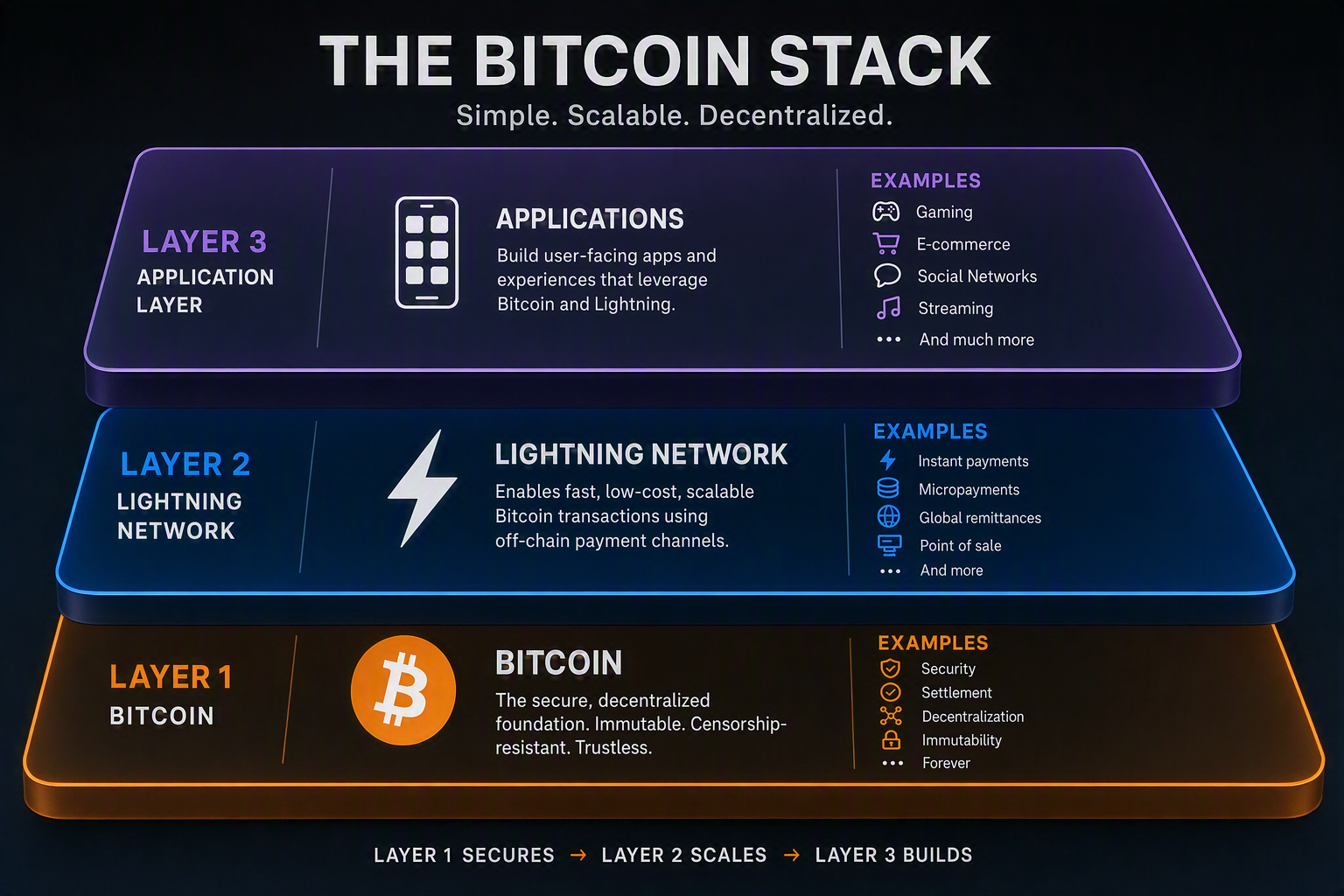
To fulfill Bitcoin’s vision as a universal medium of exchange without compromising its core tenets, developers looked upward. The solution lay not in modifying the robust base layer, but in building a secondary framework on top of it. This approach birthed the Lightning Network, Bitcoin’s premier Layer 2 scaling solution. By moving transactions off the main blockchain while retaining its cryptographic security, the Lightning Network introduces near-instant, low-cost microtransactions, unlocking a new era of global utility for Bitcoin.
1. The Scaling Problem: Why Bitcoin Needs Layer 2
To understand the genius of the Lightning Network, one must first comprehend the constraints of the Bitcoin base layer, often referred to as Layer 1 (L1).
Bitcoin achieves its unprecedented security and censorship resistance through a global consensus mechanism known as Proof-of-Work (PoW). Thousands of independent nodes across the planet validate every single transaction and record them in blocks. These blocks are minted roughly every 10 minutes, and their size is strictly capped.
This architectural design enforces a hard limit on throughput. When the demand for transactions exceeds the available space in a block, a bidding war ensues. Users must attach higher transaction fees to incentivize miners to prioritize their transactions. During bull markets or periods of intense network activity, a simple transfer can cost tens of dollars and take hours to confirm.
Modifying Layer 1 to increase transaction speeds presents severe trade-offs:
- Increasing block size: Larger blocks require more storage and bandwidth, which prices out ordinary individuals from running validation nodes. This leads to centralization, as only wealthy corporations or data centers could afford to maintain the network.
- Shortening block times: Speeding up block production increases the frequency of accidental chain splits (orphaned blocks), weakening the overall security of the ledger.
Faced with this dilemma, the Bitcoin community adopted a layered scaling strategy, akin to how the modern internet or traditional banking systems are structured. In legacy finance, the Fedwire system handles high-value, final settlements between central banks, while consumer-facing layers like credit cards, ACH, and PayPal handle millions of daily retail transactions. The Lightning Network acts as Bitcoin’s retail layer, enabling high-velocity transactions that ultimately settle on the underlying secure vault of the Bitcoin blockchain.
2. What is the Lightning Network?
The Lightning Network was first proposed in a 2015 whitepaper by Joseph Poon and Thaddeus Dryja. It is an open-source, decentralized protocol built on top of the Bitcoin blockchain.
Unlike Layer 1, where every transaction is broadcast to all network participants and stored permanently on the blockchain, the Lightning Network allows two parties to transact directly with one another off-chain. These off-chain transactions are real, cryptographically secured Bitcoin transfers, but they do not need to be recorded on the blockchain immediately.
Instead of broadcasting every cup of coffee purchased, the parties maintain a private balance sheet. The main Bitcoin blockchain is utilized only twice: once to open the transaction channel (setting up the tab) and once to close it (settling the final bill). By reducing the burden on Layer 1 to mere final settlements, the Lightning Network scales Bitcoin’s potential capacity to millions of transactions per second, operating at the speed of light.
3. How the Lightning Network Works: The Technical Core
The operational mechanics of the Lightning Network rely on a clever combination of smart contracts, cryptography, and game-theoretic incentives. The core components driving this system include payment channels, multi-signature wallets, Timelock contracts, and onion routing.
Payment Channels
A payment channel is the fundamental building block of the Lightning Network. It represents a financial relationship established between two participants off-chain. To open a channel, Alice and Bob create a 2-of-2 Multi-Signature Wallet on the Bitcoin base chain. Both parties must deposit an agreed amount of Bitcoin into this wallet—for instance, 0.05 BTC each, creating a channel with a total capacity of 0.1 BTC. This opening transaction is recorded on the blockchain.
Once the channel is funded, Alice and Bob can send money back and forth indefinitely without touching the blockchain again. If Alice wants to pay Bob 0.01 BTC, they simply update their internal balance sheet: Alice now owns 0.04 BTC, and Bob owns 0.06 BTC. Both sign the updated balance sheet cryptographically. If Bob later pays Alice 0.02 BTC, the ledger updates again. These updates occur instantly and cost fractions of a cent, as they require no miner validation or block space.
Hashed Timelock Contracts (HTLCs)
You do not need an open, direct payment channel with every person you wish to transact with. The real power of the Lightning Network emerges when these individual channels link together to form a cohesive global network. Payments can be routed across multiple intermediate participants.
This multi-hop routing is made safe through Hashed Timelock Contracts (HTLCs). HTLCs are primitive smart contracts that ensure transactions are executed conditionally.
Suppose Alice wants to pay Dave, but she only has a channel with Bob. Bob has a channel with Charlie, and Charlie has a channel with Dave. Alice can route her payment through Bob and Charlie to reach Dave. To prevent Bob or Charlie from stealing the funds mid-transit, the payment is locked with a cryptographic puzzle. Dave generates a secret piece of data (the preimage) and hashes it. He passes the hash to Alice.
Alice then sends the funds through the network, locked to that specific hash. Each intermediary can only claim the funds moving through their channel if they provide the matching preimage within a certain timeframe. Once Dave receives the payment, he reveals the preimage to Charlie to claim his money. Charlie uses it to claim funds from Bob, and Bob claims them from Alice. If any party fails or goes offline mid-transaction, the timelock expires, and the funds are automatically refunded to their rightful owners. Security is maintained without trusting a single intermediary.
Onion Routing
To protect user privacy, the Lightning Network utilizes a variant of onion routing, similar to the technology powering the Tor browser. When a payment is routed through multiple nodes, the sending node wraps the routing instructions in multiple layers of encryption—like layers of an onion.
Each intermediate node along the path only possesses the cryptographic key to decrypt its specific layer. Consequently, a routing node only knows which node handed it the payment and which node it must pass the payment to next. It has no visibility into the original sender, the final recipient, or the total amount being transferred across the entire path. This architecture prevents network surveillance and protects financial privacy.
4. Key Advantages of the Lightning Network
The implementation of the Layer 2 scaling paradigm brings unprecedented benefits to the Bitcoin ecosystem, transforming it from a rigid digital gold asset into a dynamic, highly functional global currency.
| Feature | Bitcoin Layer 1 (Base Chain) | Bitcoin Layer 2 (Lightning Network) |
|---|---|---|
| Throughput (TPS) | ~7 transactions per second | Millions of transactions per second |
| Settlement Time | 10 to 60 minutes (1-6 blocks) | Milliseconds to seconds (Instant) |
| Average Fees | Variable ($1 to $50+) | Fractions of a cent (Sats) |
| Primary Use Case | Store of value, high-value settlement | Micropayments, daily retail commerce |
| Privacy Level | Pseudonymous (Public ledger) | High (Off-chain, Onion routed) |
Instant Settlements
On the base chain, a transaction is not considered fully settled until it is included in a block, and safely buried beneath several subsequent blocks to avoid double-spending risks. This process takes anywhere from 10 minutes to an hour. On the Lightning Network, payments are finalized as fast as data can travel across internet cables between nodes. This instantaneous finality mirrors the user experience of modern digital payment applications like Apple Pay or Visa, making it viable for point-of-sale retail environments.
Near-Zero Fees and Micropayments
Because Lightning transactions do not require block space or energy-intensive mining rewards for every single transfer, the cost of transacting drops dramatically. Fees on the network are typically measured in Millisatoshis (one-thousandth of a Satoshi, where a Satoshi is the smallest unit of Bitcoin, or 0.00000001 BTC).
This granular cost structure enables entirely new internet business models based on micropayments. Users can pay fractions of a cent to read a single news article, stream a minute of video, or bypass an online paywall, bypassing the friction of monthly subscription models.
Exceptional Scalability
By offloading high-frequency churn to a web of peer-to-peer channels, the total capacity of the network is bounded only by the hardware and internet speeds of the participating nodes. The Lightning Network can easily scale horizontally to accommodate hundreds of millions of users simultaneously, fulfilling the consumer throughput requirements of the global population.
5. Current Bottlenecks and Challenges
Despite its revolutionary architecture, the Lightning Network is not a flawless magic bullet. It is an evolving technological frontier that faces several structural, operational, and user-experience limitations.
Liquidity Management and Inbound Capacity
In traditional digital wallets like PayPal, receiving money is as simple as creating an account. On the Lightning Network, receiving funds requires inbound liquidity.
Because a payment channel functions like an abacus, you cannot receive coins on a channel unless coins have first been pushed to the other side. If Alice opens a channel with Bob and funds it entirely with 0.05 BTC, her balance is 0.05 and Bob’s is 0. This means Alice can send up to 0.05 BTC to Bob, but she cannot receive any money from anyone through that channel until she spends some of her balance first, creating empty space on her side of the abacus. Managing inbound liquidity remains a complex hurdle for casual users and merchants alike.
Online Availability and Security Risks
To accept payments securely and prevent fraud, a Lightning node must remain online and connected to the internet continuously. If a node goes offline for an extended period, a malicious channel partner could attempt to broadcast an outdated, fraudulent channel balance to the Layer 1 blockchain to steal funds.
To mitigate this risk, the ecosystem relies on Watchtowers—third-party nodes that monitor the blockchain on behalf of offline users. If a Watchtower detects an illicit channel closure attempt, it automatically broadcasts a penalty transaction that seizes all funds from the bad actor and awards them to the victim. While effective, this adds structural complexity to the network.
Routing Failures
When a payment routes through multiple hops, it depends on each intermediate channel having sufficient liquidity to pass the funds forward. If Alice tries to send $20 to Dave through Bob and Charlie, but Bob’s channel with Charlie only has $10 of liquidity available on that side, the payment will fail and must find an alternative path. For large payment amounts, routing paths can become fragile, leading to delayed or failed transactions.
User Experience (UX) Complexity
For the average consumer accustomed to intuitive apps, the technical nuances of the Lightning Network—such as managing channels, tracking liquidity, choosing between custodial and non-custodial wallets, and dealing with invoices—can be daunting. While wallet developers have made massive strides in masking this complexity under clean interfaces, a steep learning curve remains for absolute self-sovereignty.
6. The Ecosystem: Wallets, Nodes, and Implementations
The development of the Lightning Network is characterized by a collaborative, multi-implementation standard. Rather than a single entity controlling the software, multiple teams build clients based on a unified specification called the BOLT (Basis of Lightning Technology) standards.
Core Implementations
- Lightning Network Daemon (lnd): Developed by Lightning Labs, lnd is the most widely deployed implementation. It focuses on enterprise-grade reliability, ease of integration, and rich feature sets.
- Core Lightning (CLN): Maintained by Blockstream, CLN is a highly performant, lightweight implementation written in C, designed for power users, modularity, and resource efficiency.
- Eclair: Built by ACINQ, Eclair is an implementation written in Scala, heavily utilized to power mobile infrastructure and consumer-facing applications.
       [ Bitcoin Layer 1 Base Blockchain ]
                       |
        ( Opening / Closing Transactions )
                       |
                       v
         [ Lightning Network Layer 2 ]
                       |
     +-----------------+-----------------+

     |                 |                 |
     v                 v                 v
[lnd Node]     [Core Lightning]     [Eclair Node]

     |                 |                 |
     +-----------------+-----------------+
                       |
                       v
       [ Consumer Wallets & Applications ]
Wallet Architecture
The consumer ecosystem is divided into two primary categories based on the user’s desired control over their funds:
- Non-Custodial Wallets: These tools give users absolute ownership of their cryptographic keys, aligning with the ethos of “not your keys, not your coins.” Modern non-custodial apps like Phoenix, Muun, and Breez utilize advanced background engineering to automatically handle channel creation, liquidity management, and backing up keys, offering an elegant user experience without sacrificing decentralization.
- Custodial Wallets: Applications like Wallet of Satoshi manage the underlying infrastructure, nodes, and liquidity on behalf of the user. While this introduces counterparty risk, it removes all technical friction, allowing users to send and receive payments instantly with zero setup configurations.
7. Real-World Adoption and Use Cases
The Lightning Network has graduated from a theoretical experiment into a robust global network driving tangible economic empowerment, especially in developing regions.
El Salvador and Nation-State Adoption
In September 2021, El Salvador made history by becoming the first country to recognize Bitcoin as legal tender. Central to this experiment was the deployment of the Lightning Network. The government launched the Chivo Wallet, allowing citizens to pay for groceries, taxes, and services instantly using Lightning rails. Global franchises within the country, including McDonald’s, Starbucks, and Walmart, integrated Lightning payments at their registers, demonstrating the protocol’s viability for high-volume corporate retail.
Remittances and Cross-Border Corridors
Traditional cross-border money transfers through services like Western Union or SWIFT are notorious for high fees (often exceeding 5-10%) and long processing windows. The Lightning Network turns cross-border remittance into an instantaneous, virtually free action.
Platforms like Strike leverage Lightning as an underlying settlement rail. A user in the United States can deposit U.S. Dollars, which are instantly converted to Bitcoin, routed across the globe via the Lightning Network in milliseconds, and converted back into local fiat currency (like Euros or Nigerian Naira) into the recipient’s bank account. The end-user reaps the benefits of Lightning’s speed and cost without ever having to hold or manage volatile cryptocurrency directly.
The Value-for-Value Content Economy
The emergence of Nostr (a decentralized social networking protocol) and Lightning-integrated podcasting platforms (like Fountain) has popularized the “Value-for-Value” model. Users can “zap” content creators small amounts of Bitcoin (Satoshis) directly in response to a good post, comment, or podcast episode. This eliminates reliance on data-harvesting advertising algorithms or restrictive payment processors, building a direct economic link between creators and consumers.
8. The Future: Innovations on the Horizon
The development pipeline for the Lightning Network is filled with bleeding-edge innovations aimed at erasing current friction points and expanding capabilities.
Taproot Assets (formerly Taro)
Powered by Bitcoin’s 2021 Taproot upgrade, the Taproot Assets Protocol enables the issuance of alternative assets—such as stablecoins, tokenized national currencies, and collectibles—directly on the Bitcoin blockchain. Critically, these assets can be transferred over the Lightning Network. This means a user could transact using a USD-pegged stablecoin with the speed, low cost, and decentralization of the Lightning Network, combining the stability of fiat with the unparalleled routing infrastructure of Bitcoin.
Splice and Channel Factories
Splicing allows users to dynamically resize their existing payment channels without closing them. Users can add or remove funds to an active channel on the fly, dramatically reducing the number of base-chain transactions required for liquidity maintenance. Furthermore, Channel Factories leverage multi-party smart contracts to allow a large group of users to open thousands of interconnected channels with a single Layer 1 transaction, compounding the network’s efficiency exponentially.
Async Payments
Currently, both the sender and receiver must be online simultaneously for a Lightning transaction to settle. Async Payments aim to break this dependency. By utilizing specialized intermediate nodes to temporarily hold encrypted payment bundles securely, users will be able to receive Lightning payments even while their mobile phones are completely offline or turned off, bringing the UX on par with traditional email or legacy banking systems.
9. Conclusion
The Bitcoin Lightning Network represents a triumphant engineering milestone in the evolution of decentralized finance. It effectively solves the blockchain trilemma—achieving extreme scalability without diluting the immaculate security and rigid decentralization of the base Bitcoin ledger.
By drastically lowering transaction fees to fractions of a cent and compressing confirmation times down to milliseconds, the Lightning Network evolves Bitcoin from a passive, digital store-of-value asset into an active, friction-free global currency. While challenges regarding onboarding, liquidity routing, and user complexity persist, the continuous torrent of developer innovation and organic global adoption points toward a bright future.
As the world increasingly demands faster, cheaper, and more inclusive financial systems, the Lightning Network stands ready. It fulfills Satoshi Nakamoto’s foundational dream: an open, peer-to-peer electronic cash system accessible to every individual on the planet.